ServicesClinical Practice & Specialist Advice
Who it's for: Patients, Families, Hospices, NHS organisations
Hospital, hospice & community
Cross-setting experience
Education & supervision
For clinicians and teams
Remote by video
UK and international
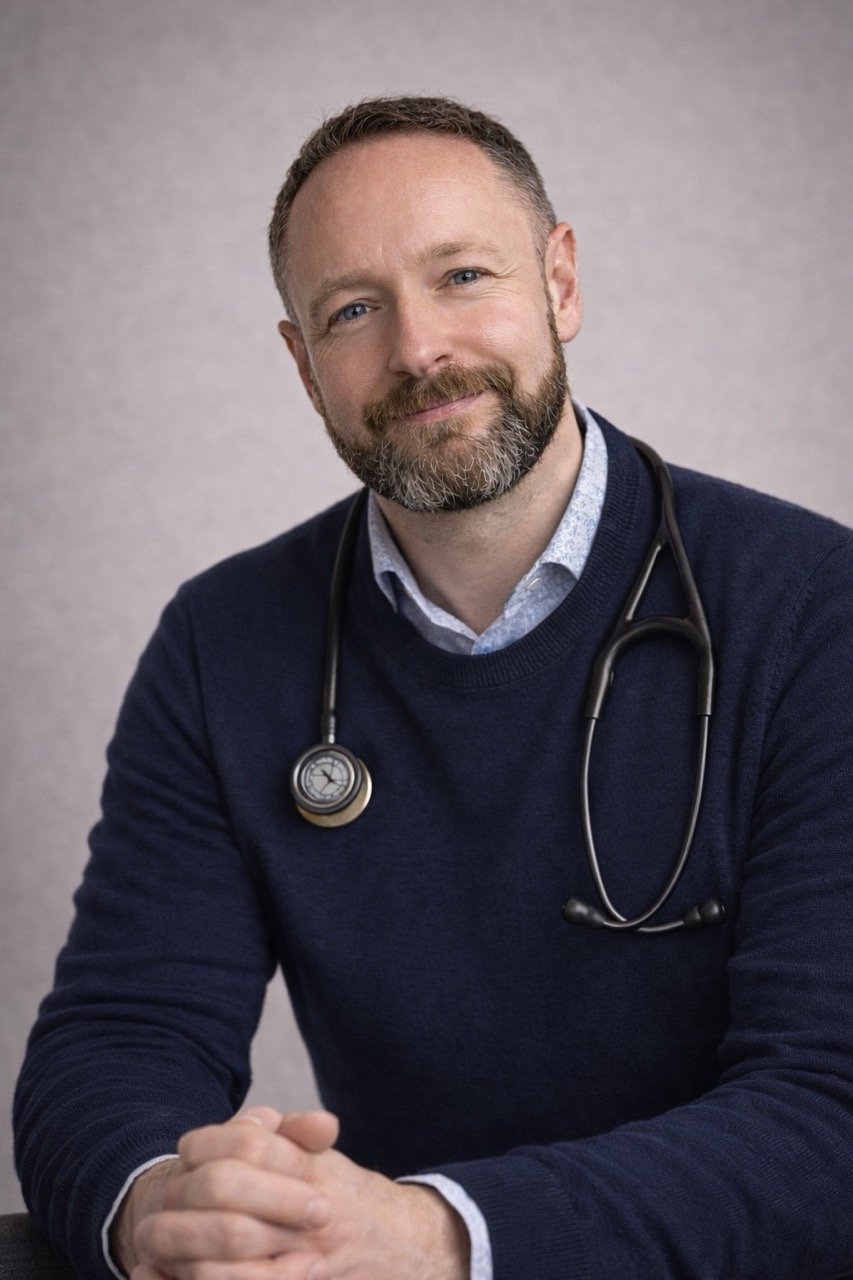
A short introductionWhat I do, and how I came to this work.
I'm a consultant in palliative medicine. My clinical practice covers hospital, hospice and community settings across Oxfordshire. Alongside that, I work independently with hospices, NHS trusts, integrated care boards, and individual clinicians on the harder parts of end of life care.
Most of my independent time goes to three areas. The first is teaching clinicians and multi-disciplinary teams how to have the conversations that matter most: breaking serious news, discussing prognosis, talking through ceiling of care decisions, and supporting bereaved families. The second is advising hospices, NHS trusts, and integrated care boards on how their palliative services are designed, governed, and resourced. The third is a developing set of online courses for clinicians, healthcare teams, and members of the public who want to think well about serious illness, dying, and the work of caring.
I trained in [SPECIALTY] at [INSTITUTION] and expected my career to look quite different. A hospice placement in [YEAR] changed that. The medicine I saw practised there, and the way the team approached the conversations they were having, was the kind of doctor I wanted to become. I completed specialty training in palliative medicine at [DEANERY] and have been a consultant since [YEAR].
The work is specific and most weeks it isn't dramatic. It's a phone call about a patient where the local team is divided. It's a half-day with a hospice executive group thinking about how to staff a service for the next decade. It's an evening teaching foundation doctors how to sit with families after a death. Done well, over months and years, this is the kind of work that changes how care feels for the people receiving it.
How I workFour principles I keep coming back to.
i.
Honesty is a clinical skill.
Patients living with serious illness, and the families around them, often want a clear honest answer more than a reassuring vague one. They are usually waiting for permission to ask the questions they've been holding in. Doing this well, without dismantling the hope a person needs to live with, is a teachable skill. Most of my education work is built around it.
iii.
Protocol cannot solve
clinical complexity.
Palliative medicine involves many decisions that do not reduce to a guideline. That isn't a problem to be solved with another checklist. It is the actual work, and it asks more of clinicians than the rest of medicine often admits. Helping people make these decisions confidently, and explain them well, is more useful than another framework.
ii.
The team caring for the patient
needs care too.
Clinical teams working in palliative care quietly accumulate loss. If service design ignores this, it stops being service design and becomes a slowly worsening clinical risk. The wellbeing of the workforce is part of the clinical model, not an extra.
iv.
Going slowly is part
of the clinical work.
The pressure to keep moving is the single biggest threat to the quality of conversations in this specialty. Almost nothing important about end of life care happens in a five-minute consultation. Time, used clearly, is the intervention.
You cannot deliver good palliative care if the team caring for the patient isn't being held themselves.
From a recent talk on clinical supervisionWorking togetherIf something here
fits the work
you're thinking about,
let's talk.
An initial call is 30 minutes by video, at no cost. We'll work out whether what I do is what you actually need. If it isn't, I'll say so and suggest someone better suited to the brief.
Booking via Calendly
Video call · UK timezone · Paid sessions also bookable