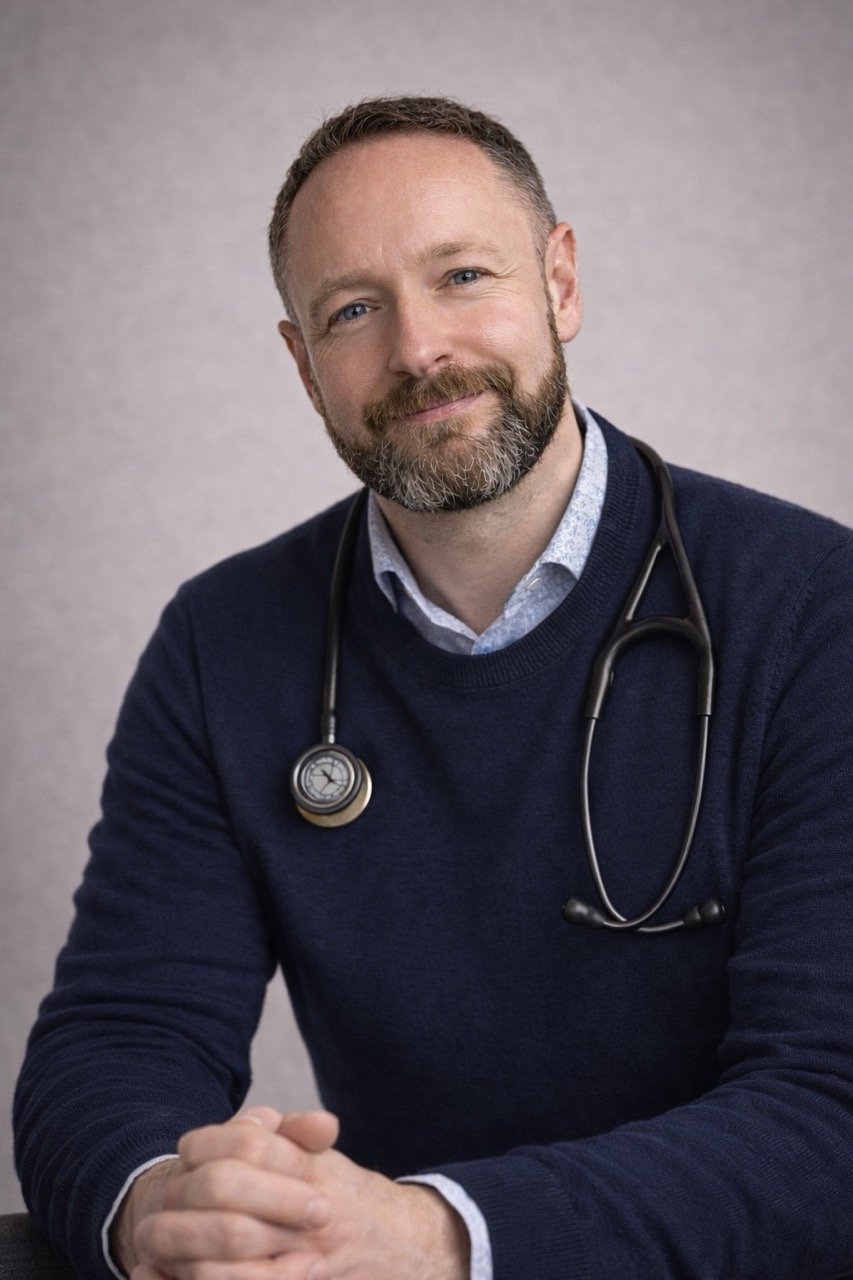
AboutDr Matthew Carey Consultant Palliative Physician, Coach and Educator
I work clinically across hospital, hospice and community settings, and independently with professionals, teams and organisation. This page shares how I came to this work, the principles that guide it, and the experiences that continue to shape it.
Clinical Practice
Hospital, hospice & community care
Education & Leadership
Teaching, supervision & development
Coaching & Professional Development
UK and international
A short introductionWhat I do, and how I came to this work.
I am a Consultant Palliative Physician working across hospital, hospice and community settings in Oxford and Oxfordshire. Alongside clinical practice, I work independently with hospices, NHS trusts, community teams and healthcare professionals on some of the most complex aspects of serious illness and end-of-life care.
Much of my independent work centres on three areas. The first is education: helping clinicians and multidisciplinary teams develop confidence in the conversations that matter most, including serious news, uncertainty, prognosis, treatment decisions and bereavement. The second is supporting organisations and services through education, leadership and service development. The third is coaching, working with individuals and teams to create space for reflection, clarity and thoughtful decision-making when the path forward is not immediately obvious.
I originally trained in General Medicine and Intensive Care Medicine in Oxford and expected my career to look quite different. A placement in a hospice changed that. The medicine I saw practised there, and the way the team approached difficult conversations, felt like the kind of doctor I wanted to become. It combined clinical expertise with honesty, humanity and the willingness to stay present when answers were uncertain.
I completed specialty training in Palliative Medicine in London and have been a consultant since 2018. Alongside my clinical work, I continue to teach, examine, advise and develop new ways of supporting both patients and the professionals who care for them.
The work itself is rarely dramatic. More often it is a conversation about a patient where opinions differ, a teaching session helping clinicians navigate uncertainty, a coaching conversation that brings clarity to a difficult decision, or a discussion about how services can better support the people who depend on them. Done well, over months and years, this is the kind of work that changes how care feels for the people receiving it.
How I workFour principles I keep coming back to.
i.
Honesty is a clinical skill.
Helping people hear difficult truths with clarity, compassion and hope is a skill that can be learned. Much of my teaching centres on helping clinicians develop that skill well.
ii.
The team caring for the patient needs care too.
Good care depends on healthy teams. Supporting the wellbeing, supervision and development of healthcare professionals is part of the work, not an optional extra.
iii.
Protocol cannot solve clinical complexity.
Not every important decision fits a guideline. Good judgement, careful thinking and honest conversation remain essential parts of clinical practice.
iv.
Going slowly is part of the clinical work.
Many of the most important conversations in healthcare cannot be rushed. Time, used well, is often the intervention.
You cannot care well for others if the people providing the care are not being cared for themselves.
Matthew CareyWorking togetherIf you're navigating something complex, let's talk.
An initial conversation is 30 minutes by video, at no cost. We'll explore what you're looking for, whether I can help, and what the next steps might be. If I'm not the right person, I'll say so and point you towards someone who may be better suited.
Video call · UK timezone · Paid sessions also bookable